






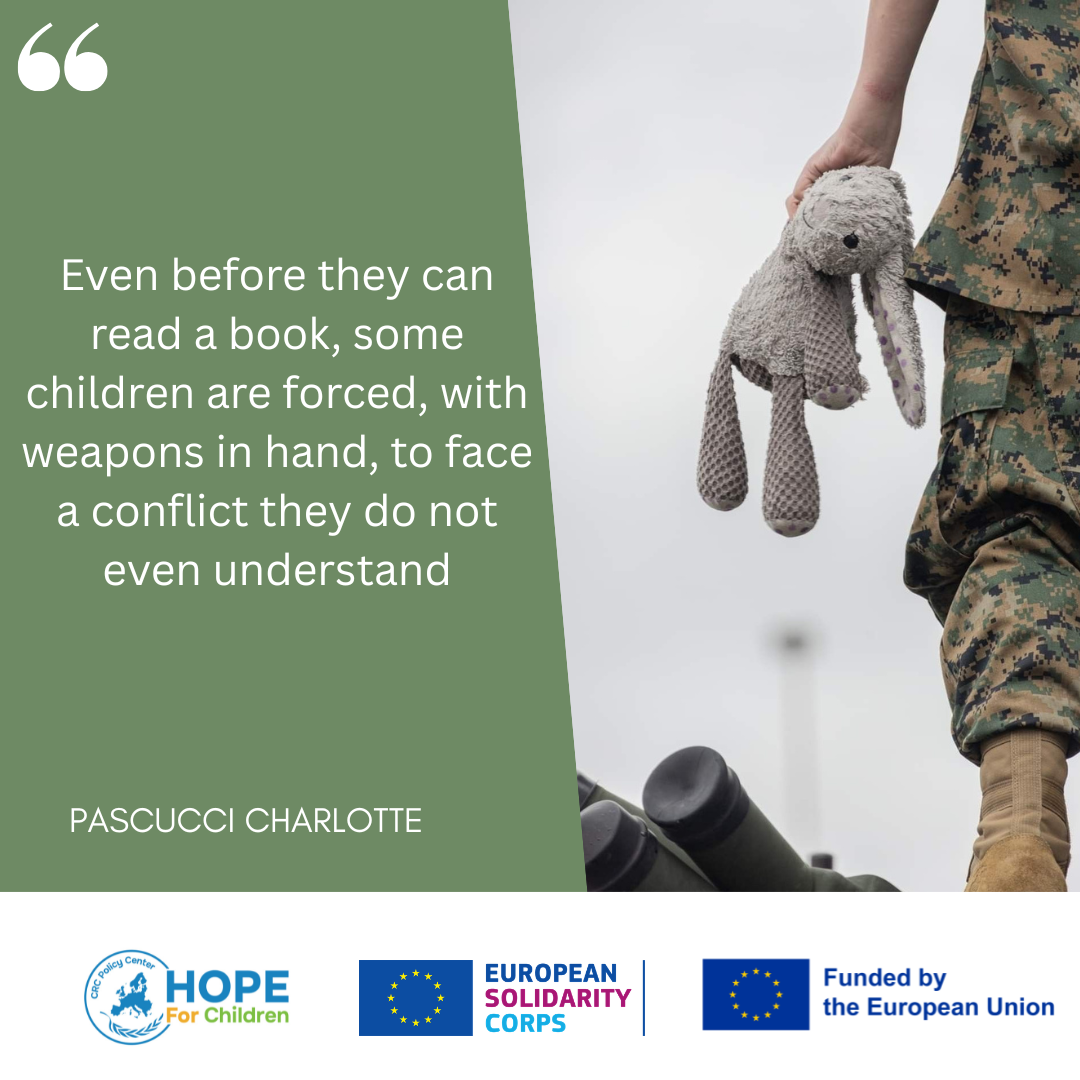
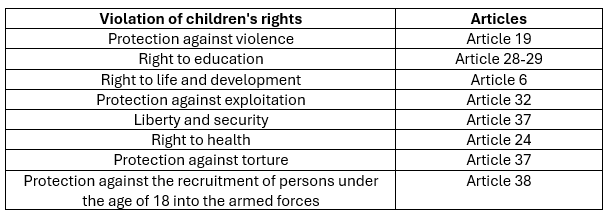
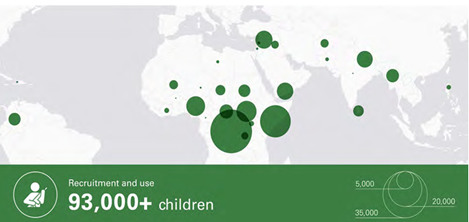
Even before they can read a book some children are forced, with weapons in hand, to face a conflict they do not even understand. From the civil war in Sierra Leone to the civil war in South Sudan, and despite international laws, reports of child recruitment into armed conflicts continue to this day. In 2022, the United Nations noted that nine countries were using children as soldiers: the Central African Republic, the Democratic Republic of the Congo, Mali, Somalia, South Sudan, Syria, Yemen, Afghanistan, and Myanmar. (UN secretary general, 2025.) A child soldier is, first and foremost, a person under the age of 18 who is recruited by an armed group or military force, some are forcibly enlisted, while others volunteer, motivated by a desire to escape poverty and by the army’s manipulation, which promises them a more prosperous life and a future filled with courage. (Legal clarity, 2025.) Child soldiers are not only combatants but also act as guards and messengers, and may be used for logistical tasks such as cleaning and cooking. This recruitment constitutes a serious violation of children’s rights under the Convention on the Rights of the Child, 20 November 1989.
The lives of child soldiers and the consequences
Children can become soldiers due to a variety of factors, the primary one being a combination of direct violence and vulnerabilities. In many conflicts, children are forcibly recruited through intimidation or abduction, separating them from their families. In other cases, psychological manipulation and indoctrination are used to gradually influence the child. Fear, the need for money, and ideological rhetoric, such as a sense of duty, then drive them to obey the adults around them. Marked by insecurity, lack of access to education, and precarious living conditions, these children join groups to survive. This is the same mechanism at work in much of the child trafficking around the world, a form of “grooming.”
Once recruited into armed groups, children are used for a wide range of tasks, from combat to support roles and sometimes even sexual exploitation, girls are the most affected by sexual violence, but boys are also at risk of sexual violence. For example, in Afghanistan with the practice of bacha bazi, where boys are forced to entertain armed men through dance and may suffer severe violence, illustrating the extreme vulnerability of children in the face of armed groups and the lack of protection for their fundamental right. (Humanium, 2022.)
The daily lives of child soldiers are marked by violence, fear, and exposure to death, which leads to psychological and physical consequences. Among the most common disorders are post-traumatic stress disorder (PTSD), depression, anxiety, sleep disorders, acute stress reactions, and certain behavioural problems. The consequences of this life affect not only mental health but also children’s social lives and development. Trauma can impact family relationships, bonds with other children, academic performance, and overall well-being. After being discharged from the military, these children face severe consequences, including trauma, dropping out of school, and difficulties with social integration. Stigmatization is also widespread, few children receive community support and are often rejected, particularly girls who have experienced sexual violence or a leading to pregnancy. This makes their reintegration even more difficult and prolongs the effects of war on their lives even after their participation in the conflict has ended. Their so-called militarized behavior, along with symptoms of depression and post-traumatic stress, can lead to social exclusion, as society expects them to conform to a stereotypical image of motherhood. (UNICEF, 2020.)
International response
Organizations such as UNICEF and the United Nations constantly monitor these violations through monitoring mechanisms and annual reports. Despite this, the data may be incomplete or distorted; during times of war, it is particularly difficult to collect reliable information and maintain constant monitoring in unstable, dangerous, or hard-to-reach areas. UNICEF intervenes directly on the ground to protect children and facilitate their release and care. Organizations such as Human Rights Watch and Save the Children complement these efforts by providing humanitarian aid and international advocacy (Office of the United Nations High Commissioner for Human Rights, 2025.) A pillar is also essential for these efforts under the Disarmament, Demobilization, and Reintegration (DDR) program (United Nations, 2026) Thanks to this program, many children are being removed from armed groups and supported in their reintegration into society; in addition, the program carries out the following activities:
– Mediation support: deployment of experts, drafting of agreement clauses, and negotiation advice;
– Analysis: mapping of armed groups and identification of entry points for programmatic engagement;
– Capacity building: strengthening the parties’ ability to work constructively toward an agreement.
Protecting the most vulnerable from conflict must be a top priority; children, in addition to being victims, should never be used as soldiers, but rather as individuals who need protection and support as they grow. Such use constitutes a violation of their rights and leaves serious and lasting psychological, physical, and social consequences in their lives. Protecting children in the face of armed conflict is a collective responsibility: it involves states, international organizations, NGOs, and society as a whole, to ensure that every child can grow up in safety, dignity, and peace.