
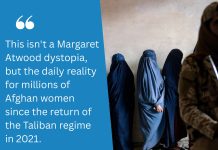







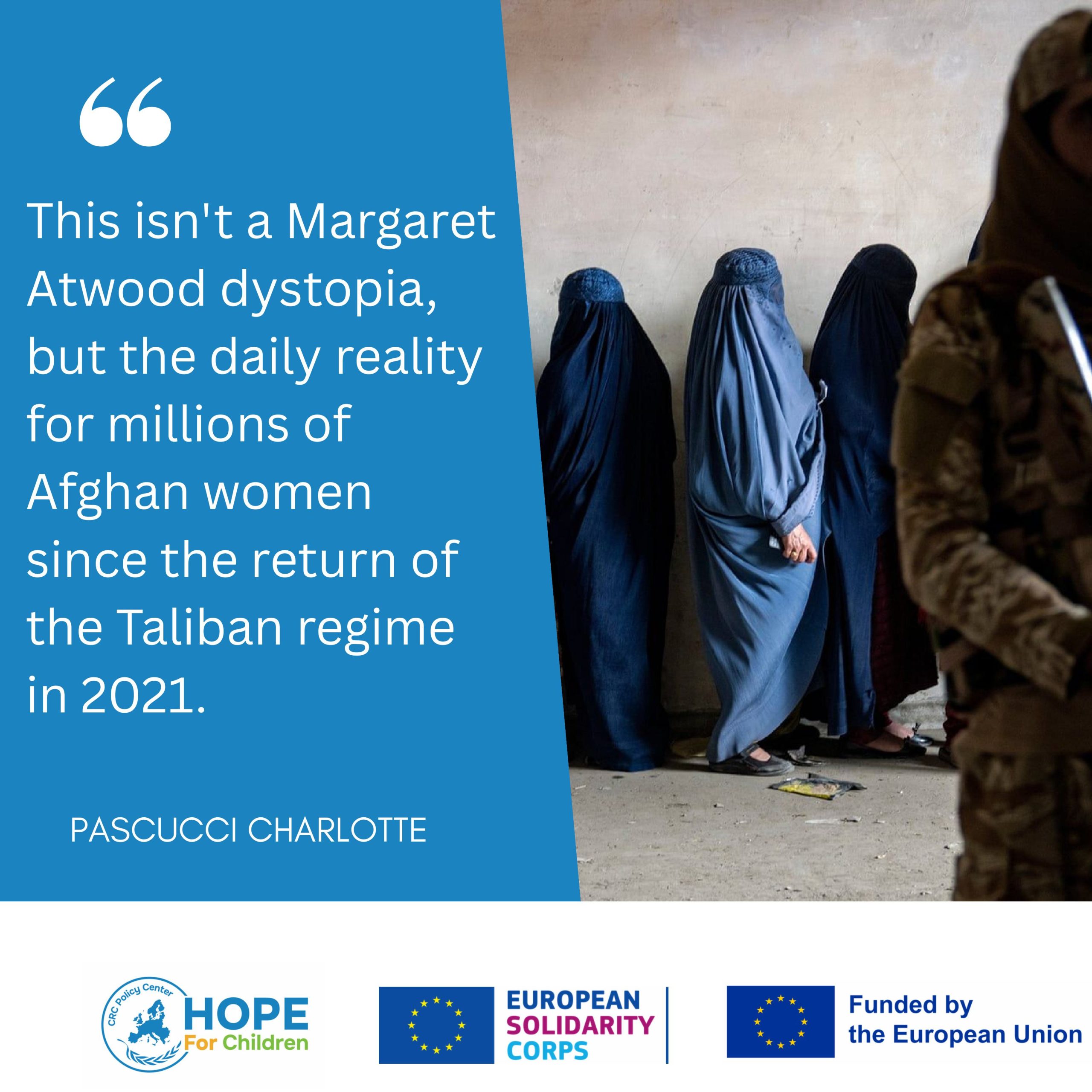
Imagine a country where women can no longer go to school, work, or even move freely without being accompanied. This isn’t a Margaret Atwood dystopia, but the daily reality for millions of Afghan women since the return of the Taliban regime in 2021. The issue of women’s rights in Afghanistan is a major concern, not only for their lives but also for the political, social, and cultural aspect of the country. Access to education, which had seen significant growth over the past twenty years, is now limited, or even prohibited, for girls in many areas. Similarly, women’s participation in the workplace has been drastically reduced, with bans affecting several professional sectors and a gradual exclusion from public spaces. These restrictions are accompanied by strict rules regarding movement, dress, and participation in social life, further isolating women. This situation has been denounced by numerous international organizations and human rights advocates, who see it as a serious violation of the principles of equality and freedom. But before the Taliban, most people forget that there was a normal life for women in some parts of Afghanistan.
Women before Taliban
The Golden Age : The 1950s–1980s
Before the arrival of the Taliban around 1996, women experienced greater freedoms, with their rights gradually expanding as society became more open. These freedoms were mainly experienced by urban, educated women, especially in Kabul and other major cities, while many rural women continued to face traditional restrictions, limited education, and patriarchal structures. Afghan women were granted voting rights in 1919, one year before women in the United States, but women’s political rights were further strengthened and constitutionally recognised later, especially in the 1964 Constitution. Women had increasing access to higher education, particularly in medicine, teaching, law, and journalism. The West played a significant role in their style of dress, appearing without a hijab, reflecting a society in transition with different ways of living. However, these rights remained confined to urban areas and not rural ones, where traditions and patriarchy, along with conservative social norms, remained very present. Afghanistan was a society divided between urban areas undergoing transformation and rural areas that were evolving very slowly. Amnesty International, 2023.
General key points:
Before the Taliban came to power, women had access to:
Education, with access to universities and research institutions, as well as employment in a wide range of fields. Women also worked as university professors and researchers.
Politics, serving in parliament from around 1965, marking a major step. Women also work as judges, diplomats; Queen Soraya Tarzi was an advocate of women’s rights and made significant progress in advancing women’s education and participation in public life.
Culture, with the streets of Kabul filled with women dressed in clothing influenced by Western fashion. The hijab was not legally compulsory before the Taliban’s interpretation and enforcement of Sharia law. RightsView, 2023.
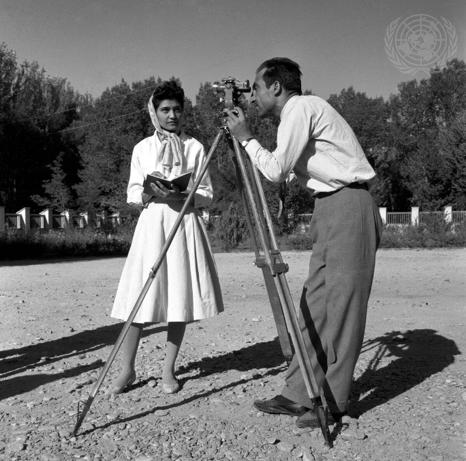
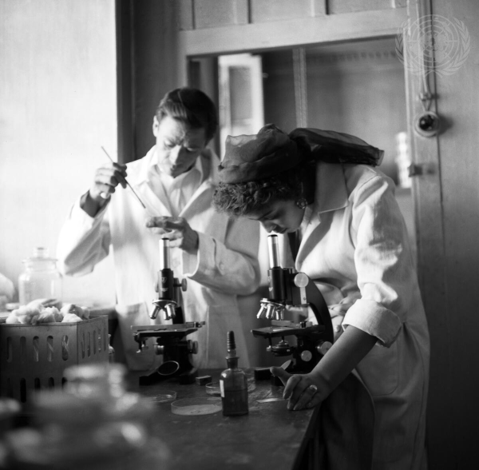
Everything changed in the 1970s, as Afghanistan entered a period of political instability and conflict. In 1973, the monarchy was abolished, followed by a communist coup in 1978 that brought a new regime to power. The Soviet invasion in 1979 further intensified the conflict and led to years of war. The collapse of state institutions, the rise of armed Islamist groups, and the civil war that followed the fall of the communist government in 1992 deeply transformed Afghan society. In this context, the Taliban emerged in the mid-1990s as an Afghan Islamist movement and seized power in 1996, imposing a strict interpretation of Sharia law.
The Rise of the Taliban
After several years of civil war, the Taliban seized power in 1996, imposing an extremely strict vision of society and excluding women from education and public life. This setback is therefore explained by decades of conflict and radicalization, not by a sudden, overnight change. Since taking power, the Taliban have imposed numerous restrictions on women and girls, severely reducing their freedom and rights. In the 1990s, the Taliban had already prohibited women from working in several sectors and restricted their movements and appearance. In Afghanistan, numerous cases of women being victims of violence and murder have been reported, most of them for defending fundamental rights such as education, work, and freedom. Farkhunda Malikzada was killed in Kabul in 2015 following a false religious accusation. Human Rights Watch, 2015. Other women, such as Malalai Kakar, a policewoman fighting against violence against women, and Safiye Amajan, an activist for girls’ education, were murdered. Amnesty International, 2012.
War On Terror
In 2001, following the September 11 attacks on the Twin Towers in the United States, the American government launched the “War on Terror” and intervened in Afghanistan to combat terrorism, notably because the Taliban were accused of providing support and protection to Al-Qaeda. The Taliban regime fell, leading to significant societal changes with the support of the international community. Women regained the right to work, vote, and participate in political life, while important was made in access to healthcare, the media, and public institutions. However, these improvements were unevenly distributed across the country, and Afghanistan continued to face major challenges, including insecurity, corruption, political instability, and dependence on international support. Despite the progress achieved during these two decades, many reforms remained fragile and were closely linked to the presence of foreign assistance. This military intervention also provoked criticism due to civilian casualties, continued instability, and concerns about Afghanistan’s dependence on the United States. The United States withdrew in 2021, which led Taliban’s return to power and the dismantling of many of the rights women had gained over the previous twenty years. This situation fuelled criticism that a foreign power can hardly impose lasting political change without genuine local ownership and long-term support. FATIMA AYUB, SARI KOUVO, 2008. the Taliban introduced increasingly strict and entrenched measures: women were excluded from schools and universities, banned from working in many jobs, prevented from participating in public life, and subjected to very strict dress and social rules. These policies led to a considerable decrease in the autonomy of Afghan women and were denounced by numerous international organizations as a serious violation of their rights. European Parliament, 2024.
| Areas | Women’s rights and freedoms before the Taliban restrictions | Restrictions imposed by the Taliban since 2021 |
| Education | Access to school and education in cities | Banned from schools and universities |
| Work | The right to practice different professions such as doctors, journalists, teachers | Prohibition from working in particular in NGOs, government agencies and the public sector |
| Freedom of movement | Greater freedom of movement compared with Taliban restrictions | Restrictions imposed, including the requirement to be accompanied by a male family member and travel limitations |
| Political and public participation | Right to vote and participate in political institutions | Excluded from the government and specifically diminished in political life |
| Freedom of expression | Right to speak publicly and to be activists | Limited in their access to the media and public expression, activists risk of assassination or arrest |
| Dress code | Freedom to choose their clothes even though social norms remained strict and conservative (Western clothing was worn mainly in cities) | The requirement to wear clothing that largely covers the body and face is reinforced, with penalties for non-compliance |
| Social life and activities | Right to frequent public places and to engage in sports and cultural activities | Access to certain parks and recreational areas is prohibited or limited |
| Access to healthcare | Right to consult doctors and to work in the medical field | Currently there are fewer female healthcare workers, restrictions on women seeking care, gender segregation rules, reduced access to services |
| Family rights and autonomy | Right to choose their lifestyle, their education, their travel and their career | Personal decisions are controlled by the authorities |
| Justice and protection | Laws existed to protect women against certain forms of violence and discrimination | The laws have been weakened or abolished |
United Nations, 2025
The current situation in Afghanistan demonstrates the limitations of foreign intervention. International support can alleviate economic and social difficulties, but it will always be difficult to sustain when it is not permanently embedded in society. What is needed is to establish laws, codes, and rights that endure, as well as a consistent presence within the country. The question, therefore, remains how the international community can sustainably support human rights without imposing changes from the outside. It also raises the challenge of preserving hard-won freedoms when political power shifts. Meanwhile, today, Afghan women continue to resist in defence of their fundamental rights, including access to education, employment, and the ability to live with dignity and freedom.