






What is an illness?
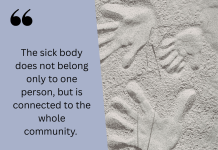
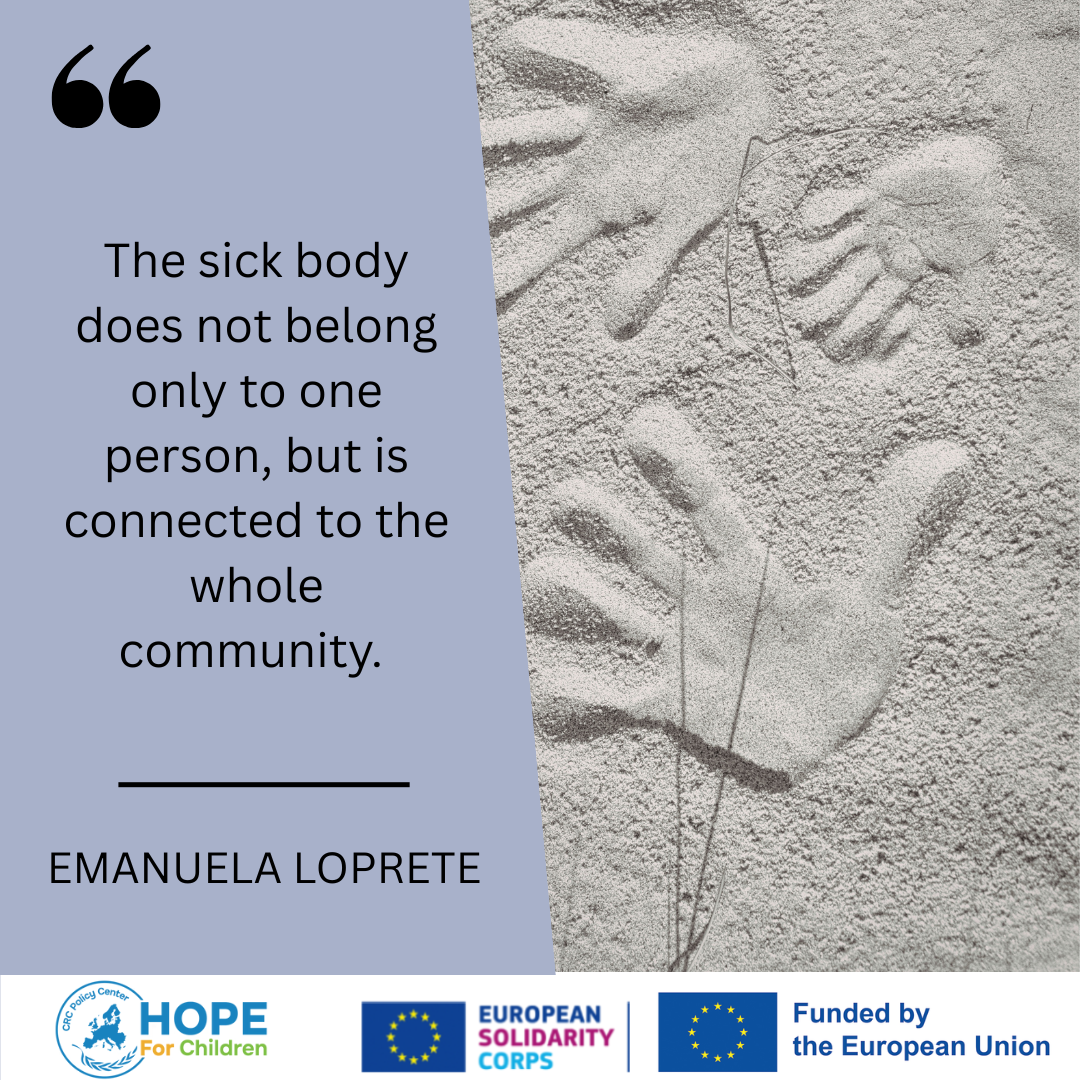
The answer is not always as simple as we usually think. Often, it changes depending on cultures, belief systems, and collective histories. In some cultures, the concept of “illness” is not viewed as something separate from society. The sick body does not belong only to one person, but is connected to the whole community. In these places, healing means restoring social and relational balance, while the physical aspect becomes less important.
Over the years, this topic has become more and more important in medical anthropology. In today’s multicultural and interconnected contexts, it is important to build a way of understanding that does not impose one universal view, but adapts to the needs of everyone. This is true for both medicine and mental health: not all the categories we are used to thinking about are objective truths that can be applied everywhere in the same way.
From this idea, ethnopsychiatry was born: a field of research and clinical practice that brings together knowledge from psychoanalysis and anthropology to understand mental suffering in relation to cultural context. It represents a deep change in the way we think about illness and care.
Medical anthropology has identified three dimensions of illness, which are essential to understand how much illness is connected to the cultural context in which it is diagnosed: disease, illness, and sickness. These definitions allign with Arthur Kleinman’s framework:
- Disease is the physical dimension, the one on which biomedicine bases its effectiveness: diagnosis, measurement, and the anatomical body;
- Illness is the subjective dimension: how a person experiences, interprets, and describes their condition;
- Finally, sickness is the social and cultural dimension, where the community gives a certain meaning and value to the illness.
Ethnopsychiatry works in the space where these three dimensions overlap, and it keeps them together. It does not give more importance to one of them, but sees them as parts of a complex system: illness as a bio‑psycho‑social event.
The migration context
In a world increasingly shaped by migration, ethnopsychiatry has become very important today. People who migrate leave behind their system of reference, their way of living, and their way of understanding the body and space, all strongly connected to their original context. When they arrive in another country, they often lose, among other things, the cultural codes that helped them make sense of their own experiences.
The trauma of the journey, the violence suffered, and the unstable economic and housing conditions are factors that can create complex psychological situations. But the suffering that comes with migration cannot be understood only through clinical categories. If a doctor sees a symptom (for example panic attacks, delusions, or insomnia) only as signs of an individual disorder, they may miss an important part of the person’s inner world, and this affects the process of support and care. In this sense, ethnopsychiatry does not deny the reality of illness, but expands its boundaries. It allows us to consider wounds that belong not only to the body or the mind, but also to a person’s history.
The ethnopsychiatric approach offers a space of care that is also a political and symbolic space. The therapist is no longer the one who holds all the knowledge, but someone who interprets different worlds. Often the work is done in a team, using the different skills of psychoanalysts, anthropologists, cultural mediators, and members of the patient’s original community. This helps build a richer and more complete understanding of the person’s distress. In practice, this means combining verbal therapy with cultural or ritual practices that, for the patient, are effective tools for reintegration.
The goal is not to decide which version is “true”, the medical one or the spiritual-traditional one, but to understand how each language helps give meaning to the distress.
Symbolic Objects in Healing
One of the most fascinating aspects of ethnopsychiatry is its ability to give dignity back to symbols as therapeutic tools.
A clear example is the meaning of fetish objects in the experiences of Nigerian migrant women, used mainly in those practices known as “voodoo rituals”.
These objects, often connected to rituals of protection or control, have an ambivalent value for the women: they are both shield and chain, a source of fear and comfort at the same time.
In Western contexts, such a connection may be seen as simple superstition, but within the original cultural systems it follows coherent logics of control and belonging. Understanding this does not mean accepting coercive practices, but recognizing that healing must pass through the meaning the patient gives to the world. Denying the symbolic importance of these objects is, from a therapeutic point of view, like denying the very language through which the patient expresses their fear.
Devaluing or even cancelling the ethnopsychiatric interpretation of illness can create a cultural break.
Living with different dimensions of suffering
A common mistake, when talking about mental health in migration contexts, is to think that the biological, symbolic, and social dimensions are separate and independent. Ethnopsychiatry shows instead that these realities are always in dialogue. In Western cultures, psychiatry often focuses directly on the symptom, usually through the use of psychiatric medication. However, this approach risks ignoring the patient’s “psychic world”, the system of meaning in which that symptom exists.
Witchcraft, for example, can be described as a “post‑rational” system: it appears when medical reasoning is no longer enough. In that moment, the magical‑religious narrative becomes a way to bring order to what has happened. Traditional healers focus on restroting relationships and social bonds, rather than correcting internal mechanisms, as doctors do. From this point of view, ethnopsychiatry does not oppose medicine, but completes it. It adds to the diagnosis a level of human depth that clinical practice alone cannot reach. In this framework, the patient is no longer a passive subject, and mutual communication and understanding become the key to emancipation and self‑determination.
For example, treating a migrant woman to make her free from an alleged spell can, paradoxically, reproduce the same symbolic violence that oppresses her: once again, someone else decides what is best for her. Recognizing her own version of the world, instead, means making her the subject of her own healing process.
A form of care that is also a political act
Ethnopsychiatry is, in this sense, a political act. It rejects the universalist idea that there is only one way to be healthy or ill. Every culture creates its own order of the world, and within that order it defines what is balance and what is dysfunction. Working in an ethnopsychiatric way means accepting that there are many ways to suffer, and therefore many ways to heal. This does not mean that everything becomes relative. It means adopting an ethics of complexity, where different truths live together and question each other. Of course, there are risks on the opposite side as well: reducing therapy to pure cultural logic and forgetting the freedom of the individual. Cultural explanations have an important role, but they must not become a cage. Mature ethnopsychiatry, therefore, moves along a delicate balance: welcoming representations without turning them into fetishes, listening to stories without judging them, building bridges without erasing differences.
Every therapeutic act is also a linguistic act. Translating the symptoms, dreams, and fears of someone from another culture is not jsut a communication challenge – it lies at the centre of ethnopsychiatry. In the migration context, the cultural mediator has a central role. They are not only a translator between languages, but an interpreter of worlds that cannot be translated.
In the end, ethnopsychiatry revolves around a powerful metaphor: interpretation. To heal means to interpret: languages, cultures, ways of thinking and feeling. But every interpretation leaves a shadow, a part that cannot be fully expressed. This is where the possibility of care is born: in the trust that meaning can appear even when words are not enough. What ethnopsychiatry teaches us is that health is never universal. Every form of care is a cultural form of love, attention, and recognition. In the age of large migrations, remembering this is not only an intellectual exercise, but an ethical imperative.
Bibliography
- Simona Taliani (2019). Il tempo della disobbedienza. Per un’antropologia della parentela nella migrazione. Ombre Corte.
- Marie Rose Moro (2002). Genitori in esilio. Psicopatologia e migrazioni. Raffaello Cortina.
- Kleinman, A. (1988). Patients and Healers in the Context of Culture: An Exploration of the Borderland Between Anthropology, Medicine, and Psychiatry. University of California Press.